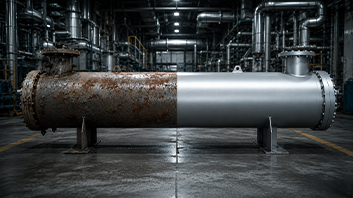
Heat exchangers are at the heart of industrial systems, capable of delivering reliable performance for years when properly maintained. Yet one of the most significant threats to their lifespan and efficiency is corrosion. Left unaddressed, corrosion reduces heat transfer performance, causes leaks, and leads to costly failures. In this article, we cover why corrosion occurs in heat exchangers, how to recognize it early, and what can be done to prevent it.
Why Does Corrosion Occur in Heat Exchangers?
Corrosion is the process by which metal surfaces degrade through chemical or electrochemical reactions with their environment. The main factors that trigger this process in heat exchangers include:
Aggressive fluids: Acidic or alkaline fluids react directly with metal surfaces, causing accelerated deterioration. In systems where pH levels are not properly controlled, corrosion can progress rapidly.
Dissolved oxygen: Dissolved oxygen in cooling water is a leading cause of rust and pitting corrosion, particularly in ferrous metals.
Galvanic corrosion: When two dissimilar metals are used together within the same system, an electrochemical current forms between them, causing the more active metal to corrode.
High temperature and pressure: Harsh operating conditions can break down the protective oxide layer on metal surfaces, reducing resistance to corrosive attack.
Chloride presence: Even in materials with high corrosion resistance, such as stainless steel, the presence of chloride ions can initiate pitting and crevice corrosion.
What Are the Signs of Corrosion?
Corrosion in heat exchangers often develops slowly and can go unnoticed in its early stages. The following indicators suggest that corrosion has begun or is already progressing:
- Unexplained drop in heat transfer efficiency
- Unexpected deviation in fluid outlet temperatures
- Increased pressure drop across the system
- Discoloration of the fluid or presence of metal particles
- Visible rust, staining, or pitting on plate surfaces or connection points
- Leaks at gasket areas or through tube walls
Prevention Methods
Correct Material Selection
The most effective and lasting defense against corrosion is selecting the right material for the system’s operating conditions. For aggressive chemical environments, high-corrosion-resistance materials such as titanium or Hastelloy are preferred, while AISI 316 stainless steel is often sufficient for standard industrial applications. Making the right material choice at the design stage delivers significant long-term cost savings.
Water Quality and Chemical Balance Control
The pH, hardness, and dissolved oxygen levels of cooling and process water should be monitored regularly and kept within controlled ranges. When corrosive ions — particularly chlorides and sulfates — approach critical thresholds, chemical water treatment should be applied as needed.
Use of Corrosion Inhibitors
Adding appropriate corrosion inhibitors to the circulating fluid forms a protective film on metal surfaces, slowing down chemical degradation. It is essential that any inhibitor used is compatible with the system’s materials and the process fluid.
Cathodic Protection
For large-scale or high-value equipment, cathodic protection using sacrificial anode materials effectively prevents galvanic and electrochemical corrosion. Protective anodes should be inspected periodically and replaced when necessary.
Regular Maintenance and Inspection
During scheduled maintenance, surfaces and connection points should be visually inspected. In areas of concern, non-destructive testing methods such as ultrasonic wall thickness measurement or pressure testing should be applied. Corrosion detected at an early stage prevents major failures down the line.
Key Considerations
- Avoid combining dissimilar metals; where unavoidable, use appropriate insulating elements between them.
- During maintenance and cleaning, avoid abrasive tools that could damage metal surfaces.
- Always verify the material compatibility of chemical cleaning solutions before use.
- If the system will be taken out of service for an extended period, drain the fluid and apply a suitable protective coating to exposed surfaces.
Conclusion
Corrosion is a slow-moving threat that, if ignored, can lead to serious consequences. Proper material selection, regular water quality monitoring, and periodic inspection will not eliminate corrosion entirely — but they will significantly extend the service life of your heat exchanger and minimize the risk of unplanned downtime. Since every system carries a different level of corrosion risk, tailoring your protection strategy to your specific operating conditions is always the most effective approach.