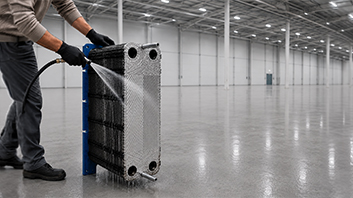
Plate heat exchangers are widely preferred in many industrial applications thanks to their compact structure and high heat transfer efficiency. However, depending on the characteristics of the fluid circulating through the system, dirt, scale, and deposits can accumulate on the plates over time, directly affecting system performance. For this reason, regular cleaning and maintenance play a critical role not only in extending equipment lifespan but also in maintaining energy efficiency.
Why Does Fouling Occur in Plate Heat Exchangers?
Fouling inside a heat exchanger is generally caused by the properties of the circulating fluid. In systems using hard water, scaling is common, while oily or particle-containing fluids may form layers on the plate surfaces. In addition, biological formations can also create deposits over time, especially within certain temperature ranges.
These accumulations make heat transfer between the plates more difficult, causing the system to consume more energy.
How Can You Tell When Cleaning Is Needed?
The need for cleaning in plate heat exchangers is usually identified through changes in system performance. A decrease in heat transfer efficiency, an increase in pressure drop, and higher energy consumption are among the most common indicators. In addition, unstable system operation may also be an early sign of fouling.
When such symptoms are observed, it is important to inspect the heat exchanger and schedule the necessary maintenance.
Cleaning Methods
Chemical Cleaning (CIP – Cleaning in Place)
Chemical cleaning is a practical method that can be applied without removing the heat exchanger from the system. Also known as CIP (Cleaning in Place), this method involves circulating suitable chemical solutions through the plates to dissolve accumulated scale, deposits, and organic residues.
Because it minimizes downtime and can be applied quickly, it is frequently preferred for routine maintenance processes.
Mechanical Cleaning
Mechanical cleaning is preferred in cases of heavy fouling. In this method, the heat exchanger is disassembled and the plates are cleaned individually. Brushes, pressurized water, or appropriate equipment are used to physically remove deposits from the surfaces.
It provides a more effective solution when chemical cleaning alone is insufficient; however, it requires more labor and a longer application time.
How Often Should Cleaning Be Performed?
The cleaning interval depends on the type of fluid used in the system and the operating conditions. Systems operating with hard water or particle-containing fluids may require more frequent maintenance.
As a general approach, it is recommended to perform inspections at least once a year. However, in intensive or critical applications, shorter maintenance intervals should be considered. The ideal maintenance schedule should be determined by monitoring system performance.
Points to Consider During Maintenance
Small mistakes during maintenance can damage the equipment or lead to performance loss. Therefore, several key points should be considered:
- Hard tools that may damage plate surfaces should not be used
- Gaskets should be regularly inspected and replaced when necessary
- Cleaning chemicals must be compatible with the plate material
- Tightening values during assembly should comply with the manufacturer’s recommendations
Proper maintenance practices ensure long-lasting and efficient operation of the heat exchanger.
Advantages of Regular Maintenance
Regular cleaning and maintenance directly contribute to system performance. Clean surfaces improve heat transfer efficiency while optimizing energy consumption. In addition, equipment lifespan is extended and unexpected failures can be prevented.
This creates significant advantages in terms of both operational continuity and cost control.
Conclusion
Cleaning and maintenance of plate heat exchangers are essential steps in preserving system performance. Maintenance procedures carried out with the correct methods and at appropriate intervals not only improve efficiency but also reduce operating costs and support a more sustainable working environment.
Since every system has different requirements, the most effective approach is to create a maintenance plan tailored to the specific operating conditions.